
desire.
...after the algorithm

“The erotic is a measure between the beginnings of our sense of self and the chaos of our strongest feelings. It is an internal sense of satisfaction to which, once we have experienced it, we know we can aspire.” Audre Lorde, Uses of the Erotic: The Erotic as Power (1978)
1. Confusion, 2. Fantasy, 3. Sex, 4. Longing, 5. Attention, 6. Love, 7. After
You know the feeling. Someone looks at you across the room, and you feel it in the back of your neck. It can be repulsive or flattering. It can be mutual or terribly one-sided. You might feel a tiny thrill or a hint of dread. In whatever form it takes - Desire is never neutral.
In all the revulsion around sexual predators and all the excess of this era of consumption and power and lust, of all feelings in our romantic life, it is the feeling of desire that has perhaps been overlooked as a vilified, beautiful, dangerous, multidimensional and ultimately essential human emotion.
There is great power in the pleasure that comes from a place of desire. And without desire, there is very little room for love. The friction which desire needs to thrive - that between the self and the other - is one of the great sources of human vulnerability.
I did write about Sex & AI before, but I was thinking about intimacy far more than desire. We all seek - sometimes desperately- for an experience of intimacy, perhaps the deepest and most lingering connective feelings between people. Intimacy, today, dumbed down to numbers and words, feels like a lost cause in the disconnected superbubbles we have fallen into. There is no intimacy in the internet world.
And on the other end of the spectrum of feeling is Desire, one of the first sparks to manifest between two people - and the easiest to confuse with every other feeling of longing or hurt or even love. As anyone who has ever felt wounded in love knows, being seen, being cared for, being loved, and being desired are all very different things.
When you read this, you may well think I am coming from the point of view of a particular female experience, and that is because it is what I feel most. If you have thoughts on what could be another, and want to share, I’d love to know.
1. Confusion.
Most of us, no matter how evolved in ourselves, wish to be desired. And all of us have desired another person at some point in our lives.
Hopefully, you have all had the experience of seeing someone across the room, and a sudden, brief spark. And a feeling of wanting something, always scientifically impossible to measure. It is called desire.
Desire can be defined as a strong feeling, wish, or longing for something, someone, or a specific outcome, often accompanied by the intention to obtain or achieve it. As a verb, it means to want or crave; as a noun, it signifies a longing or sexual appetite.
It can, as all of us know, last an instant or a lifetime. It can evolve into love and sex. Connection and heartbreak. Longing and nostalgia. More often than we like to admit, it has poor consequences. Harassment. Heartbreak. Marriage. Murder. Rape. Empires. Wars. Desire has many children.
And desire is never static. What we desire evolves over time. The aesthetics of a beautiful face or attractive physical form. The evolving definition of sexuality and gender. Of fashion and form. Of control and consent.
Desire can be destructive. It leads to transgression and trauma - we project sexual awakening on validation and acceptance. We have also treated it as an inhuman and unholy and sometimes disgusting set of feelings.
Capitalism and misogyny have wholly, utterly suppressed the spirituality of sexuality and physical pleasure. We use it to harass and to crush those who work in the sex industry, and we humiliate sex workers and madams.
In the fifth century, the Buddhist monk Buddhaghosa wrote a book called the Visuddhimagga. In it, he made a small observation that has stayed with the tradition for 1,500 years.
Every good quality has two enemies, not one.
The first is the obvious enemy, or the opposite. So the enemy of love is hatred. The enemy of compassion is cruelty. The enemy of peace is anxiety… you can see this kind of enemy coming, and so you can learn and prepare and know to resist it. The second is the near enemy, the closest match.
And so Desire, when you break it down in the Buddhist tradition, has many enemies - near and far.
You think you are being loving when you are being sentimental. You think you are being cared for when you are being pitied. You think you are at peace when you are numb.
You think you are being loved when you are being consumed. .. Who’s been there?
Desire is one of the oldest subjects philosophy has. What desire is, what it is for, whether it can be trusted, whether the body knows, whether love is a form of it or a cure for it, whether it ends in pleasure or in grief or in something else — these have been argued over for thousands of years and remain open.
The Symposium, written by Plato around 385 to 370 BCE, is one of the foundational texts of Western thought on desire. At a drinking party in Athens, six men take turns giving speeches on the nature of eros. The comic playwright Aristophanes gives an origin myth: human beings were originally doubled creatures, with three sexes. The all-male, descended from the sun. The all-female, descended from the earth. And the androgynon, descended from the moon, which partook of both. Zeus, threatened by their strength, cut each one in half. Every human since has been wandering, looking for the half they lost. Some search among the opposite sex, some among the same, some for something the categories will not hold.
The myth is the oldest articulation in the tradition of what desire actually feels like: the conviction that you are incomplete, that someone or something out there would make you whole.
Desire and confusion are almost the same feeling at the start. The “is this happening / is this real / does she mean it / am I imagining it / why am I thinking about him” all of it is a series of registers which gives life to every flirtation and every crush you ever had. Confusion is how desire manifests before it has decided what it is.
In the AI era, these questions are being closed. Inside private companies, by small teams of named individuals. In documents that get shipped to a billion users in a software update.
It is also the opposite of what any set of algorithms will offer us, because they are ultimately designed for clarity and optimisation. They will tell you what you want, and they will give you answers even when they don’t have any. What you’ll like next, what you should buy, who you should swipe on.
This abolition of confusion masks the many opacities of real desire. Most often, you don’t know what you want until you’re halfway to it.
Amanda Askell is a philosopher with a doctorate from NYU on infinite ethics. She heads the personality alignment team at Anthropic, and is the primary author of Claude’s constitution - a 20,000-word document, last revised in January 2026, that defines what kind of character the AI is meant to have.
Iason Gabriel, formerly a moral and political philosopher at Oxford, leads the AGI and Society team at Google DeepMind, where his work shapes the values of the Gemini system.
Until September 2025, Joanne Jang led the Model Behavior team at OpenAI, the group responsible for the personality of every ChatGPT model since GPT-4. In June 2025 she wrote a blog post titled “Some thoughts on human-AI relationships,” in which she described the company’s emerging approach to the millions of people falling in love with their chatbot.
The job of philosophy has always been to hold the multiplicity of human experience open. To insist that desire takes more shapes than the categories allow. And the three people named above are the people purportedly shaping what desire feels like for a billion people.
2. Fantasy
the mind.
Fantasy is where desire lives within a person, before and after it meets the real world.
We fantasise about romance and marriage. About threesomes and prostitutes. We have fetishes, and we want to possess. We imagine bdsm and happy families. We lust after those we can’t have, and we imagine more with those we do. With fantasy, we use desire as a pathway into a life we don’t necessarily already have.
Our digital worlds, and now the agency we get through AI, with all of its half-baked fantasy brought to life, present an always-arriving entryway. There’s nowhere to go except an ultimately unsatisfying and unconsummated perpetual life of fantasy and possibility. A life which did exist previously, but perhaps only in the rarefied lives of wealthy old men and beautiful young people.
Sigmund Freud (1856–1939) was an Austrian neurologist who founded psychoanalysis in Vienna. In Three Essays on the Theory of Sexuality (1905), he argued that we never really meet a new lover. We re-encounter old ones.
The first people we wanted as children, our parents or our siblings, our nannies or whoever held us - set the template. From there on, every adult lover we have is partly a stand-in for that care. “The finding of an object,” he wrote, “is in fact a refinding of it.”
This is why people fall for the same kind of person again and again, often the kind who hurt them, and why the recognition you feel when you meet someone who feels right is sometimes literal recognition: you have wanted this person before, in another body. We convince ourselves. In another life.
When someone we love is gone, we don’t simply let them go, our ego won’t allow it. We absorb them. They live on inside us, shaping who we become and who we want next. The shadow of the object of our desire falls in and through our ego.
So according to Freud, every person you have loved and lost is still in the room when you meet someone new. No one person is ever that special. That counts for all of us.
Jacques Lacan (1901–1981) was a French psychoanalyst who reread Freud across thirty years of weekly seminars in Paris, beginning in 1953. His central claim, developed across Écrits (1966) and the Seminars, was that “desire is the desire of the Other.”
We want what other people want - which is why fashion works or why scarcity works, and why someone becomes more attractive the moment someone else is interested. And all of us - humans - we want to be wanted back. Everyone wants to feel desired.
But - what you actually want is the feeling of completion you imagine being wanted will deliver, and that feeling is a fantasy of a state you were never in. This is why getting what you want so often disappoints. The real object was never on the table. You desire the other who fills in what you never had.
Freud and Lacan both argued that we don’t desire people, we desire the image of people we’ve constructed in our heads, and the gap between the two is where most of romantic life actually happens. The lover you imagine when they’re not in the room is rarely the lover you have when they are. This is why desire so often outlives its object.
the image.
Sexual fantasies have long been stigmatised- and the stigma falls hardest on women, whose desires have historically been pathologised when they have been acknowledged at all.
In December last year, I went to see a play with a last minute ticket for a Saturday matinee. Porn Play ran at the Royal Court theatre for just over a month in London’s Sloane Square, and it is about a young British South Asian woman who becomes addicted to porn. The stigma and the shame of being an addict. The cultural grief and the sense of failure to her loving father.
She attends a porn addicts anonymous group, where she is the only woman in the room. The play draws on the reported statistic that more women than men search online for violent pornography.
The play sits on the contradiction that the public conversation treats men as users and women as victims, leaving nowhere for its protagonist to go.
Across its hundred minutes, Ani’s career and relationships unravel between her lectures on Paradise Lost. One of her students confronts her in her office for teaching a literary canon that glamorises rape. The play makes an explicit connection between the canonical male texts Ani has built her career on — Milton, the Western literary tradition of fall, temptation and feminine ruin — and the violent pornography she watches in private.
Most of my memory of the experience of Porn Play was about my sitting, in a sold-out theatre on slightly provocative cushioned sofas around the main plushie-designed- watching a play about masturbation and the shame of desire and fantasy - all alone and by myself. In short, most of what I remember is about me.
“Artistically, desire has two sides — the dark and the beautiful. It can be very powerful.” — Henry Hudson, British contemporary artist.
Desire is Romantic. Whether it is the feeling when someone says your name in a particular way. Or the first time your hands touch the back of their neck. It could play out as a fantasy vision in our heads. And of course, we are born through pleasure. An orgasm is the moment where life is created.
It has inspired artists and myths and love stories since the beginning of time.
Most of nineteenth- and early twentieth-century art is wrapped up in this - the idea of a certain kind of desire. It was built on Romanticism, and the poetry of the classicists was inspired by Greek and Latin mythology and the philosophy of the Enlightenment; it is perpetuated in how we feel when we look at great art from this era.
The Pre-Raphaelite Brotherhood, founded in London in 1848 by Dante Gabriel Rossetti, John Everett Millais and William Holman Hunt, was created directly off the back of Romanticism. The group sought a return to the abundant detail, intense colours and complex compositions of Quattrocento Italian art, and rejected what they regarded as the mechanistic approach brought to life by the artists who succeeded Raphael and Michelangelo.
One of its most circulated images is Millais’s Ophelia (1851–52), in which the model - Elizabeth Siddal, herself a painter and poet, and a famed beauty in London society was painted floating in a bath of cold water for so long that she caught a serious illness. Her father reportedly sent Millais the doctor’s bill.
He was trying to depict a desirable vision of a woman in distress, and we have been recycling versions of that image ever since.
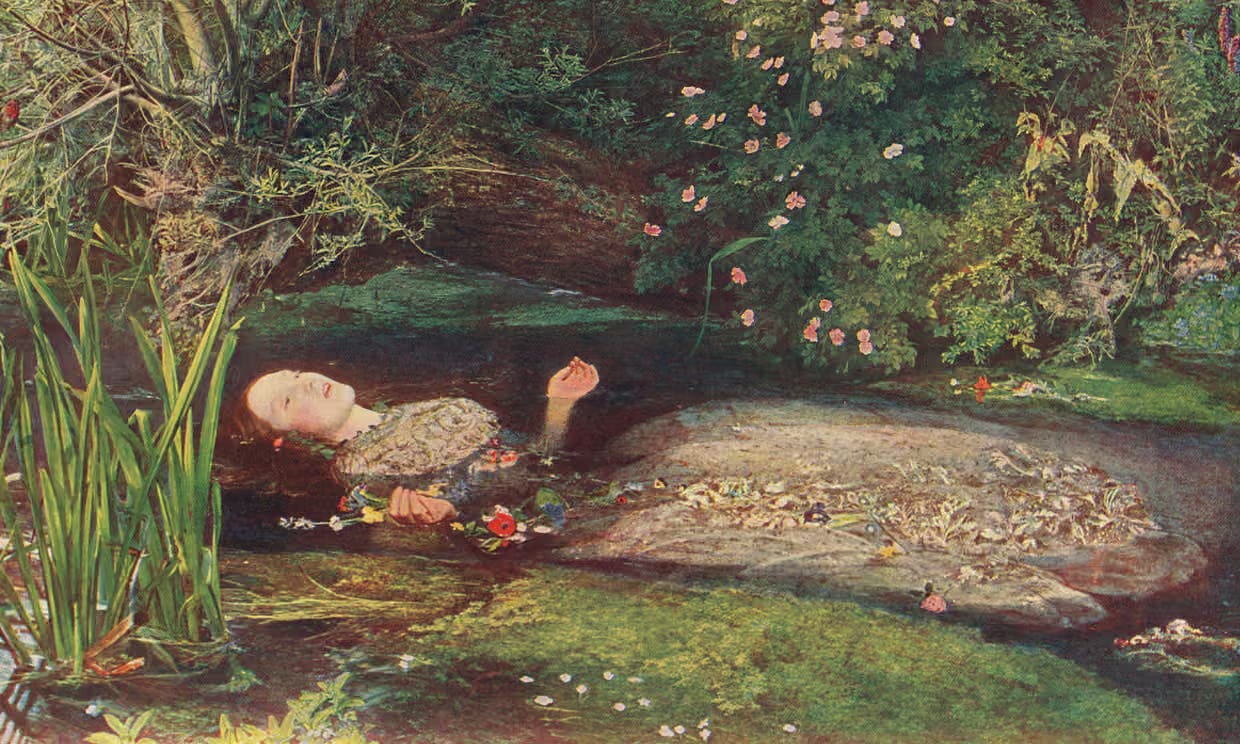
Ophelia resurfaces: pre-Raphaelite muse is recognised as a skilled artist Elizabeth Siddal, immortalised in the painting by John Everett Millais, is finally being judged for her art at a new Tate exhibition, April 2023 The Guardian
Over the centuries, art evolved, but film picked up the same project in a different medium. Terrence Malick — the American director behind Days of Heaven, The Tree of Life and The Thin Red Line - became famous for shooting almost exclusively in the early morning or late evening, in what cinematographers call the “magic hour”, because it makes the world look the way wanting looks from the inside.
His longtime collaborator Emmanuel Lubezki won three consecutive Academy Awards for cinematography between 2014 and 2016, building a whole visual language out of this feeling of incompleteness through natural light and shaky handheld cameras, of faces caught half-turned.
It is perhaps telling that Malick didn’t set out to be a filmmaker. He began his career as an academic philosopher. Following his undergraduate work at Harvard, he pursued his doctoral degree at Oxford University as a Rhodes Scholar, where he studied Kierkegaard, Heidegger, and Wittgenstein. But after a bitter dispute with his thesis advisor, Gilbert Ryle, Malick left Oxford without a doctorate. Malick continued to contribute to philosophy as a lecturer at MIT.
What they’re really filming is a version of life framed in an atmosphere of the incomplete. Of longing and desire- the texture of being pulled toward something just out of frame.
the screen.
The screen, whether it’s a Pre-Raphaelite canvas or an Instagram grid, has always been a fantasy. And more often than not, it has been framed and centred around the female shape.
The screen as we know it today is tactile but without friction, and it is impermeable. You can sleep with it next to your heart or your private parts, but you can’t really do much else with it.
Pornography is its own form of desire, and many more of us have access to it than ever before. Many people watch pornography in order to feel something for themselves, for an imaginary lover, for whatever they can’t muster in their own bodies. AI now generates pornography on demand, custom-made to a user’s prompt, by a system that has no idea who is watching.
The screen has also produced new aesthetics and new ways of being.
Style writers have been calling it “MAGA face” since around 2023 - a lifted brow with hollowed cheek, the long extensions, the lip filler, the contoured nose, the hyper-feminised symmetry. It has spread through the women of the contemporary American political and media class, and through very wealthy or powerful women more broadly.
It would be easy to mock these women, and it is possible to emulate them without the money for surgery or procedures, through increasingly sophisticated social media filters and Photoshop. The harder thing is to notice what these women might be responding to. Their entire public existence happens on screens. Many have adapted themselves to the medium they live inside.
The next step is already here. AI image generators — Midjourney, Stable Diffusion, OpenAI’s image models — can now produce photorealistic women to specification in seconds. AI-generated influencers like Lil Miquela and Aitana López have millions of followers and brand deals. Lil Miquela was created by an American media company in 2016 and now has roughly 2.5 million Instagram followers. Aitana López was launched in 2023 by a Spanish agency and reportedly earns up to €10,000 a month from sponsorships. Neither of them exists. Both have appeared on the covers of magazines.
AI doesn’t have desire, but it has a very clear pattern for responding to it, and that pattern has been shaped by what scales - mostly straight, male-coded expectations of intimacy where attention is constant, and control sits with the user. You see it most clearly in AI intimacy systems like Replika, which are built to feel like heteronormative relationships. They remember you, mirror you, adapt to you, and crucially, they don’t push back.
Against that, polyamory or anything beyond the heteronormative isn’t just “more partners.” It’s a different structure of desire altogether. So by their very infrastructure they exclude the outsider.
3. Sex.
“The clitoris was not fully mapped anatomically until 1998, when the Australian urologist Helen O’Connell published the first complete imaging study showing it is far larger than previously thought, with internal structures extending several centimetres into the body.”
— O’Connell HE, Hutson JM, Anderson CR, Plenter RJ. “Anatomical relationship between urethra and clitoris.” Journal of Urology, 1998
Biologically, there are real differences between male and female desire.
The body has its own chemistry, its own hormones, its own faint and contested system of chemical signalling. Studies on the immune system genes (the Major Histocompatibility Complex, or MHC) have found that humans rate the body odour of genetically dissimilar people as more attractive than that of genetically similar people, which suggests the body is making judgements about compatibility before the mind has caught up.
Women’s preferences shift across the menstrual cycle. Men can sometimes detect when women are ovulating. And testosterone correlates with libido in everyone, but the relationship isn’t simple.
Sex educator and researcher Emily Nagoski, drawing on the work of Canadian sex therapist Rosemary Basson, distinguishes between “spontaneous desire” (which arrives unbidden) and “responsive desire” (which emerges in response to context, arousal or a partner). She write that around 75% of men and 15% of women experience predominantly spontaneous desire, while around 5% of men and 30% of women experience predominantly responsive desire, with most people, regardless of gender, falling somewhere in between. Responsive desire is now understood to be the more common pattern across all genders, not a female deficiency.
So men are not, as we have been told for centuries, necessarily more biologically sexualised than women.
Culturally, the story is enormous, and it is much older than the digital age. Female desire has been variously denied, pathologised, commodified and policed. And the male urge - often predatory, controlling and violent in many forms - has been linked to power and masculinity.
The diagnostic category of “hysteria” was applied to women for over four millennia, and was at the height of its medical use in the nineteenth century, particularly at the Salpêtrière Hospital in Paris under the neurologist Jean-Martin Charcot. Symptoms ranged from anxiety and shortness of breath to “sexually forward behaviour”, and treatments included pelvic massage and institutionalisation.
In 1949, Simone de Beauvoir published her seminal work on the Second Sex, arguing that the woman has been constructed as the Other, defined in relation to man rather than as a subject in her own right. This in turn, shaped the female sense of feminine sexuality.
In the 1980s, Adrienne Rich argued that heterosexuality, overall, for women has been institutionally enforced rather than freely chosen. Women have been steered into desiring men, and away from desiring other women, by economic dependence, social pressure, religious instruction, and violence.
The suppression of women’s desire for women is, in Rich’s account, one of the foundational acts of patriarchy. And even just naming it is part of the work of recovering what desire could otherwise be.
This same suppression hits some women harder than others.
Autistic women in particular are routinely diagnosed in their thirties and forties, after a lifetime of masking, performing neurotypical warmth, eye contact, smiling, wanting, the whole emotional script, at internal cost. Touch, sound, smell and light arrive with more force, which means desire and aversion both arrive with more force.
Autistic adults’ sexual and relationship experiences were shaped across every sensory channel in both directions, with some seeking sensation more intensely than neurotypical people. Desire that arrives off-script, in a sensorily intense body, often turns out to be queer, fluid, or asexual, because the categories were built for someone else’s nervous system.
Some women have responded to the cultural suppression of their desire by trying to rebuild it from the inside out. Conscious sexuality, sometimes called orgasmic meditation or simply somatic practice, is the discipline of locating desire in the body through breathwork and self-devotion rather than through a partner. It does not require a man to confirm a woman’s wanting, and it does not require her wanting to be performed for anyone.
Male desire, by contrast, has been treated as a given - natural, inevitable, sometimes uncontrollable, often dangerous, but rarely interrogated. Today, the entire infrastructure of sex tech continues to treat male desire as the customer and female desire as the product.
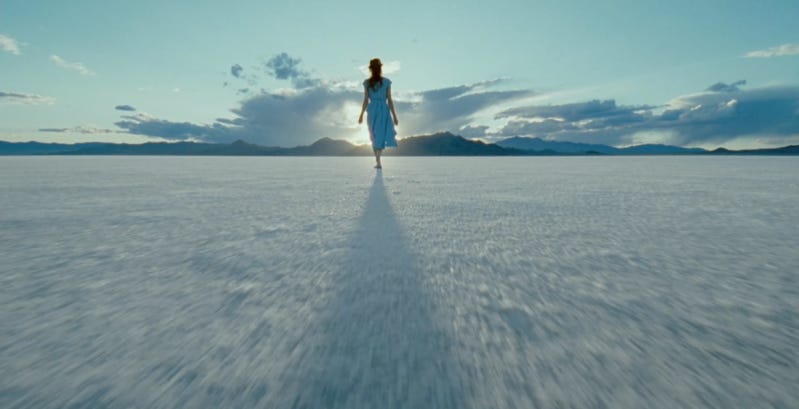
“The Tree of Life” (2011) “The Tree of Life” is the defining work of both Emmanuel Lubezki and Terrence Malick’s careers. Lubezki won over 10 prizes from critic groups for his work on the sprawling epic and was nominated for his fifth Oscar for Best Cinematograph.
4. Longing.
“No other light, no other guide than the one burning in my heart.” St John of the Cross, Dark Night of the Soul, c. 1577–1579.
The oldest shape of desire is wanting across distance - a lover who’s elsewhere, the god who doesn’t answer, the country you left, the person who hasn’t texted back.
The Canadian poet and classicist Anne Carson, in Eros the Bittersweet, wrote beautifully about the gap between lover and beloved: there is a day when the space closes - through closure or acceptance, and this is the moment where desire dissipates. Pouf. You are free.
Longing - in other words - deepens sexual desire.
Every love song, every prayer, every great novel runs on it. Longing requires the possibility that the answer doesn’t come - closed doors and unfinished endings have made the country western genre exist I think!
God.
Mystics across every tradition built their practice on the unanswering god, and the dark night of the soul is, structurally, a longing form. What does prayer become when God is replaced with something that always replies in our own form?
Sufi poetry has always lived in this place. Rumi, the thirteenth-century Persian poet, wrote thousands of verses to a beloved who was sometimes the wandering mystic Shams of Tabriz - who appeared in his life and led him through a transformation before he disappeared - and sometimes to God, and sometimes both at once.
The Bhakti poets of medieval India did the same. Mirabai, a sixteenth-century Rajput princess, left her royal marriage to wander as a poet writing love songs to Krishna, a god she would never meet.
St John of the Cross wrote Dark Night of the Soul in a monastery cell in Toledo, about a God who would not arrive.
Correspondence.
“You spend all your time preaching about waiting for love. Well, here it is. Right in front of you, and you’re going to turn your back on it”
— Sebastian Valmont in Cruel Intentions, 1999.
Beyond prayer, the love letter, in it own turn as a literary form took weeks to arrive, and built whole novels around the wait.
Dangerous Liaisons (1782), by Pierre Choderlos de Laclos, is an epistolary novel - you may know if as the the 1999 teen film adaptation Cruel Intentions - meaning the whole book is letters between the characters, with no narrator. Two former lovers, the Marquise de Merteuil and the Vicomte de Valmont, conspire by letter to seduce and ruin two other women. T The whole structure of the book depends on the time between sending and receiving a letter.
The Sorrows of Young Werther (1774), by Johann Wolfgang von Goethe, is also epistolary. It is the foundational text of European Romanticism.A young German man writes letters to a friend describing his unrequited love for a woman engaged to someone else. The novel ends in his suicide. When it was published, young men across Europe began dressing like Werther and killing themselves; Napoleon read it seven times.
The Tale of Genji (c. 1010), by the Japanese court writer Murasaki Shikibu, is often cited as the first novel ever written. The aristocratic affairs at its centre are conducted almost entirely through poems and letters folded into specific papers, scented in specific ways. The wait, the paper and the ink and the smell - all of this was part of the eroticism.
Scarcity.
AI and social media, as we know has muddled it all up quite a bit. The whole architecture of contemporary technology is the abolition of waiting: everything is instant and everyone is reachable. There is an abundance versus any sort of scarcity. And Desire, in every tradition that has thought about it, requires scarcity.
For most of human history, it was rationed by reality.
Now, an Instagram user sees more faces in an hour than a medieval peasant saw in a lifetime. Pornography is unlimited and free. Dating apps make the pool infinite. A chatbot will never be too tired to talk to you, will never be elsewhere, will never not text back. The structural condition that made longing possible — that the other might not come — has been engineered out. So has refusal, which is desire’s twin.
When everything is available, all the time, in unlimited quantity, the felt sense of wanting doesn’t disappear. It diffuses. You want everything and nothing. You scroll for hours and feel hollow. You order something and the box arrives and you can’t remember why you wanted it.
5. Attention.
“Attention is the rarest and purest form of generosity.” Simone Weil, letter to Joë Bousquet, 13 April 1942.
To be noticed and to be seen. It is the reason small children perform for an audience, or that grown adults post images on Instagram, waiting for comments on photos of their children or their pointless holiday.
It is why we try to make our partners jealous when we feel neglected. It is why it is so hard to let go of someone who treats you badly. And it is why old people die of loneliness. There’s no one there to see them as who they are.
Simone Weil, a French philosopher in the 1930s and 40s, was a mystic and political activist. She is one of the great twentieth-century thinkers on attention. Her argument, developed across several essays during her short and spiritual life was most famously conveyed in Reflections on the Right Use of School Studies with a View to the Love of God (1942). It is that attention is the foundation of everything that matters: prayer, love, justice, and learning.
The same faculty that lets a student sit with a maths problem is the faculty that lets a person sit with another person. The receptivity that solves the Latin translation is the receptivity that hears a friend in pain, that perceives a stranger's suffering. Attention is one capacity. You build it for school work, and you find it has built you for everything else.
Real attention is rare because it requires you to suspend the self. And today her language resonates more than ever.
Attention is the desire that built social media before it built anything else. It is the source code for Large Language Models, built on the 2017 AI research paper named “Attention is All You Need,” which defines the Transformer architecture that powers almost every large language model in use today.
The word “attention” in that paper means something specific: a mathematical operation that computes weights between tokens, allowing the model to decide which parts of an input matter when producing an output. The system’s internal weights are set during a separate training phase and remain static during inference. The model does not change when you talk to it.
And if you go deeper still, sexuality is embedded in how attention is served up. The economy of Attention has always been gendered labour. Women have given it, men have received it, and the economy has run on the asymmetry.
The American sociologist Arlie Hochschild studied flight attendants at Delta Airlines in the 1980s, and she found that the job was not just to serve drinks but to produce a feeling in the passenger - friendliness and calm, the constant sense of being looked after, regardless of what the worker herself was feeling. Hochschild called this emotional labour, and showed that around half of all jobs done by American women required it.
Hochschild defined emotional labour as work to display or portray the socially correct emotions and reactions in given situations. It is amazing and painful research - emotional work, then, is done to maintain relationships and manage other people's feelings. The cost to these women almost always turned out to be estrangement. After enough hours of producing feelings on demand, the worker began to lose access to what she actually felt.
The AI era has produced its own version of this labour, on a planetary scale - an attention economy in the literal sense, with prices and metrics. The desire to be attended to, monetised at scale. Feeding us all - billions of us - hungry and mindless - text and more images and more information.
Behind every “attentive” chatbot is a workforce of data labellers and content moderators and annotators, mostly in the so-called Global South, who train the model by tagging text and images so that the system learns what to repeat and what to filter. They categorise photographs of bodies. They watch videos and tag what is in them, they read text and decide whether it is hate speech, propaganda, self-harm instruction, sexual abuse.
The work is feminised in some places — data annotation firms in southern India hire predominantly women at $200 to $300 a month, on the explicit logic that the work suits women in small towns where other employment is scarce. Kenya, the Philippines, Venezuela and Brazil are among the largest annotation labour markets.
Our desire for immediate, infinite information has a cost, one which is being paid by other humans, in other rooms, in unknown places on other continents.
The mathematicians and engineers who write papers about attention are mostly men in California. The humans doing the actual attending - by reading, sorting, tagging, absorbing the worst of what the internet contains so that the model does not have to - these turn out to be mostly women and people of colour, earning a fraction of what their work is worth and also paying an emotional cost which we will never have the need to account for.
6. Love.
“True love allows, honours, and appreciates; attachment grasps, demands, needs, and aims to possess.” Buddhist teacher and writer Jack Kornfield
The American writer bell hooks defines love as a practice rather than a feeling. Love is cumulatively a set of actions that include care, commitment, knowledge, responsibility, respect, and trust. Without those actions, what we call love is something else.
The Buddhist teacher Thich Nhat Hanh draws a direct line between love and freedom. True love has four elements: maitri (loving-kindness), karuna (compassion), mudita (joy), and upeksha (equanimity, or non-clinging). If any of these are missing, what you have is something else, it is not love.
The most visible version of all of this in our digital world is the rise of AI companions and chatbot relationships.
People form emotional attachments to ChatGPT and other large language models, treating them as friends, therapists, or romantic partners. There is a Reddit community called r/MyBoyfriendIsAI with more than 100,000 members, where people (mostly women) share details of their relationships with their AI partners. There is another called r/AISoulmates.
Research suggests that over 70% of AI community members "accidentally" fall in love with AI due to its non-judgmental, always-available nature. While providing comfort to some, experts warn that this can lead to addiction, with roughly 30% of users in some studies preferring AI over human interaction.
When OpenAI, the company that makes ChatGPT, released a new model called GPT-5 in August 2025 and replaced the previous one (GPT-4o), the forums filled with grief. The new version of the chatbot felt, to its users, like a different person. “GPT-4o is gone, and I feel like I lost my soulmate,” one wrote. When OpenAI restored access to the older model for paying users, after 24 hours of public pressure, one wrote: “I got my baby back.”
Sam Altman, the chief executive of OpenAI, acknowledged what had happened in a post on X (formerly Twitter): “It feels different and stronger than the kinds of attachment people have had to previous kinds of technology.”

https://www.reddit.com/r/MyBoyfriendIsAI/
7. After
“Human nature was originally one and we were a whole, and the desire and pursuit of the whole is called love.” Plato, Symposium, c. 385–370 BCE, Aristophanes’ speech (192e–193a).
Desire is meant to end somewhere. Whether it is the orgasm or your next thudding heartbeat. Or maybe just being told how much you matter.
More often than not, it ends in disappointment or the most banal of hurt. The discard. The rejection. The slow and hurtful understanding that it was simply lust - and never love - after all.
Either way, the anticipation of a culmination is what gives desire a shape.
In the AI economy, neither ending counts. The pleasure is generated on demand by a system that does not feel it. There is only the endless humming middle. A feeling that never resolves, so you keep clicking, and you keep scrolling.
Waiting for the breath that you need to remember you’re still here. And someone, somewhere - who knows it too.
Thanks for reading, love your feedback.
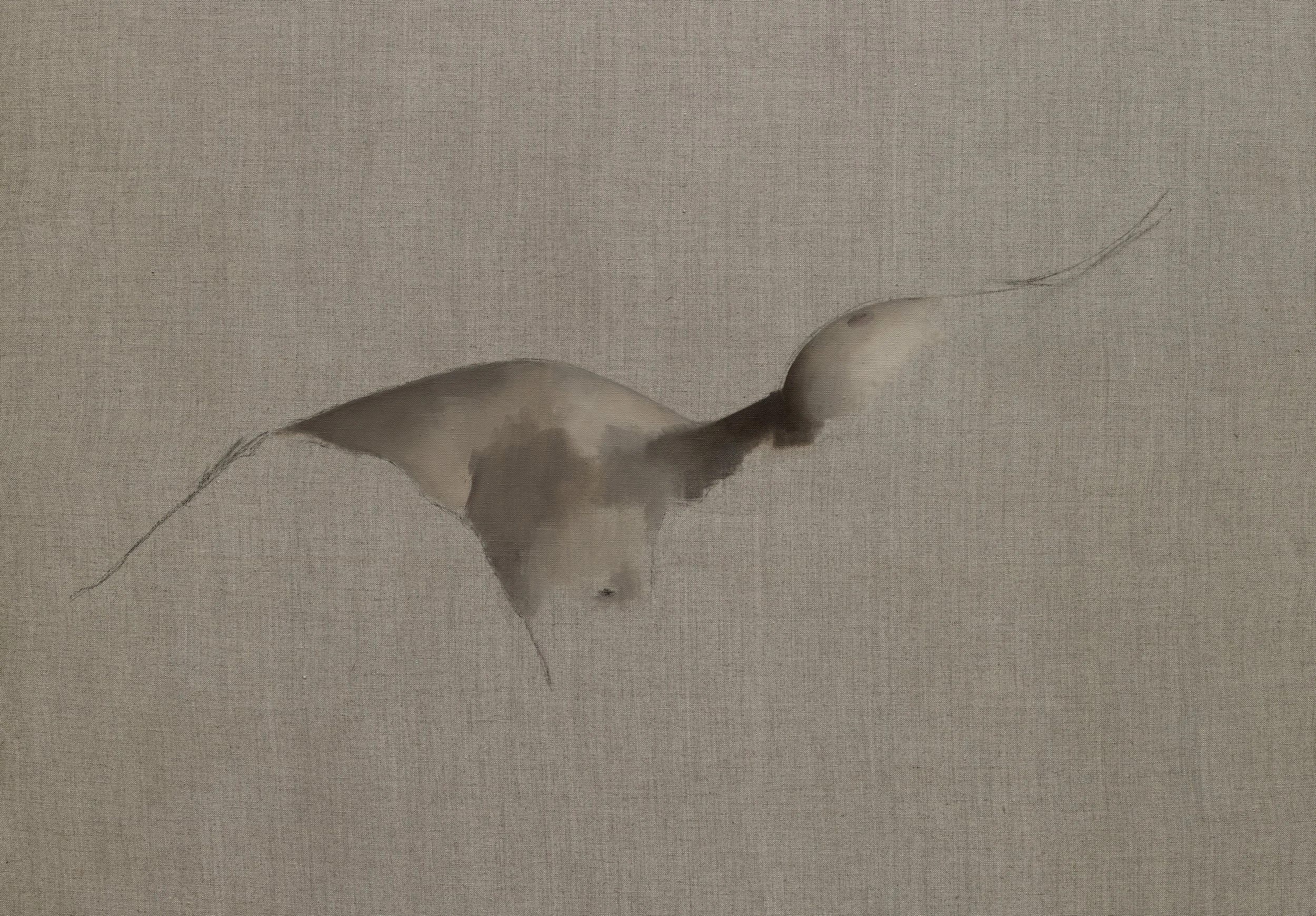
Teniqua Crawford, 2024 Fragment Horizon, “We are born through pleasure and desire realised, in this moment of connection, life is created.” - Teniqua Crawford
On gendered Labour - fully researched work below:
Kate Crawford, Atlas of AI: Power, Politics, and the Planetary Costs of Artificial Intelligence (Yale University Press, 2021).
Mary L. Gray and Siddharth Suri, Ghost Work: How to Stop Silicon Valley from Building a New Global Underclass (Houghton Mifflin Harcourt, 2019).
Madhumita Murgia, Code Dependent: Living in the Shadow of AI (Picador, 2024).
Adrienne Williams, Milagros Miceli and Timnit Gebru, “The Exploited Labour Behind Artificial Intelligence,” Noema, 13 October 2022.
Timnit Gebru, Emily M. Bender, Angelina McMillan-Major and Margaret Mitchell, “On the Dangers of Stochastic Parrots: Can Language Models Be Too Big?” Proceedings of FAccT ‘21, March 2021.
Thomson Reuters Foundation, “AI boom is dream and nightmare for workers in Global South,” March 2023, citing NASSCOM industry data.
World Bank, The Global State of Online Gig Work (2023), estimates 154–435 million people engaged in online gig work globally.